Facade Engineering Designs
Facade Engineering Research
Lateral Torsional Buckling (LTB) in Slender Systems
Modern façade systems extensively utilize thin-walled aluminium and steel frame elements with slender, open cross-sections. While these profiles enable lightweight and visually refined designs, they introduce complex structural challenges due to their inherently low torsional stiffness. Under real-world conditions, façade members are subjected to combined loading—axial forces, bending, shear, and torsion—making their behavior highly sensitive to instability effects.
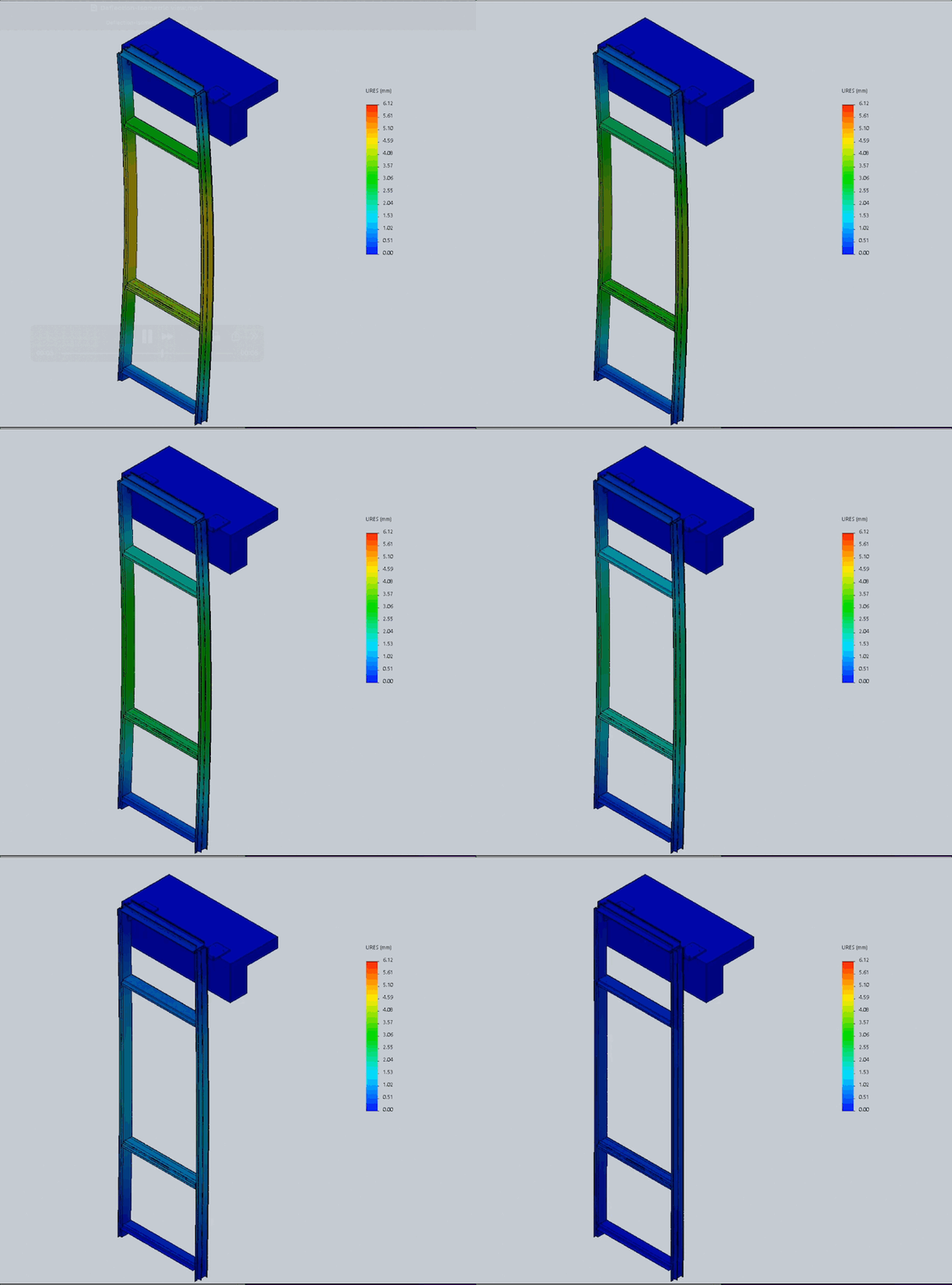
One of the most critical and often overlooked phenomena in façade engineering is lateral torsional buckling (LTB). In such slender members, failure can occur well before the material reaches its yield strength, driven purely by instability rather than material capacity. This makes conventional strength-based design checks insufficient unless stability analysis is rigorously incorporated.
Despite its importance, LTB is frequently under-evaluated in façade design practice, primarily due to its complexity and the advanced understanding required to model and interpret structural behavior accurately. Neglecting LTB checks can lead to two major risks—overdesign, resulting in uneconomical solutions, or underdesign, which may compromise structural safety.
At BES, we recognize the critical role of stability analysis in high-performance façade engineering. Our research focuses on bridging this gap through practical, software-based methodologies for LTB assessment, aligned with international design codes and validation procedures. By integrating analytical approaches with digital simulation tools, this study provides engineers with a reliable framework to evaluate slender façade members under complex loading scenarios.
This research paper on façade engineering design has been published through an internationally recognized technical organization, reinforcing BES’s commitment to advancing engineering excellence and innovation in the façade industry.